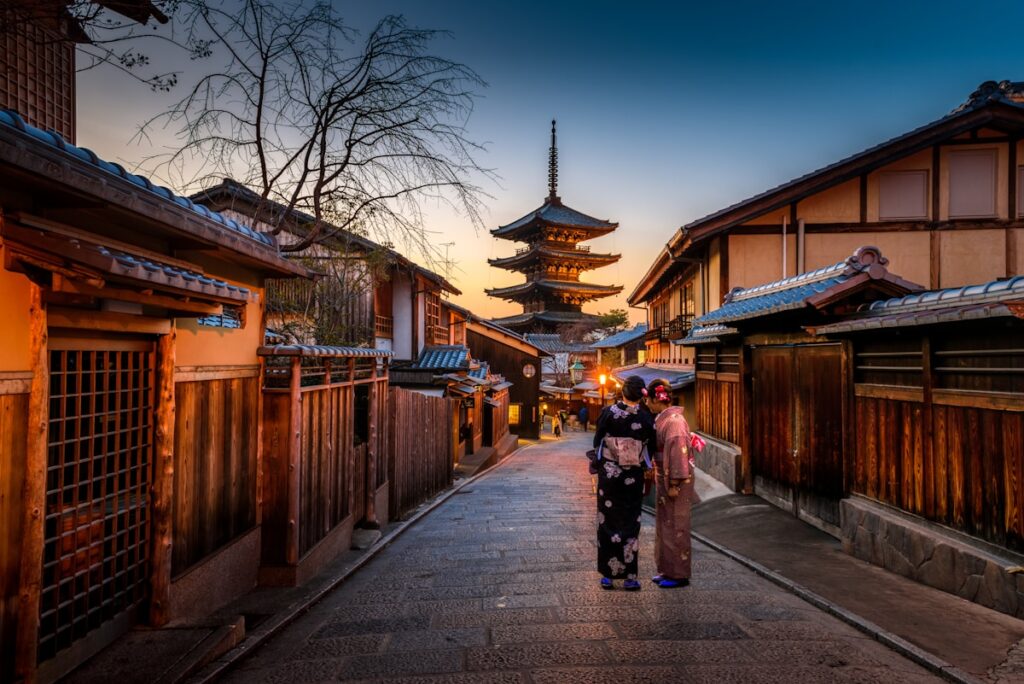
Kyoto is a city of layers. While the gold-leaf temples are undeniable, the real heartbeat of Kyoto resides in its private, hidden courtyards—known locally as “tsuboniwa.”
These tiny gardens are micro-ecosystems of stone, moss, water, and maple. Originally designed for merchant houses to bring air and light into long, narrow structures, they are masterclasses in architectural spatial economy.
“Step behind the wooden machiya facades to discover private moss gardens, quiet tea houses, and ancient maple trees.”
To experience this quietly, seek out traditional cafes in the Gion and Nishijin districts. Sit on the polished wooden floor, order a bowl of whisked Uji matcha, and observe how the soft afternoon light falls across wet moss rocks.
In these quiet spaces, time operates differently. The rustle of a maple leaf or the drip of a bamboo water pipe is the only calendar that matters.
About The Author